
Highway Replacement, Long term Planning, Comprehensive Master Plans, Visualization, Physical Modeling
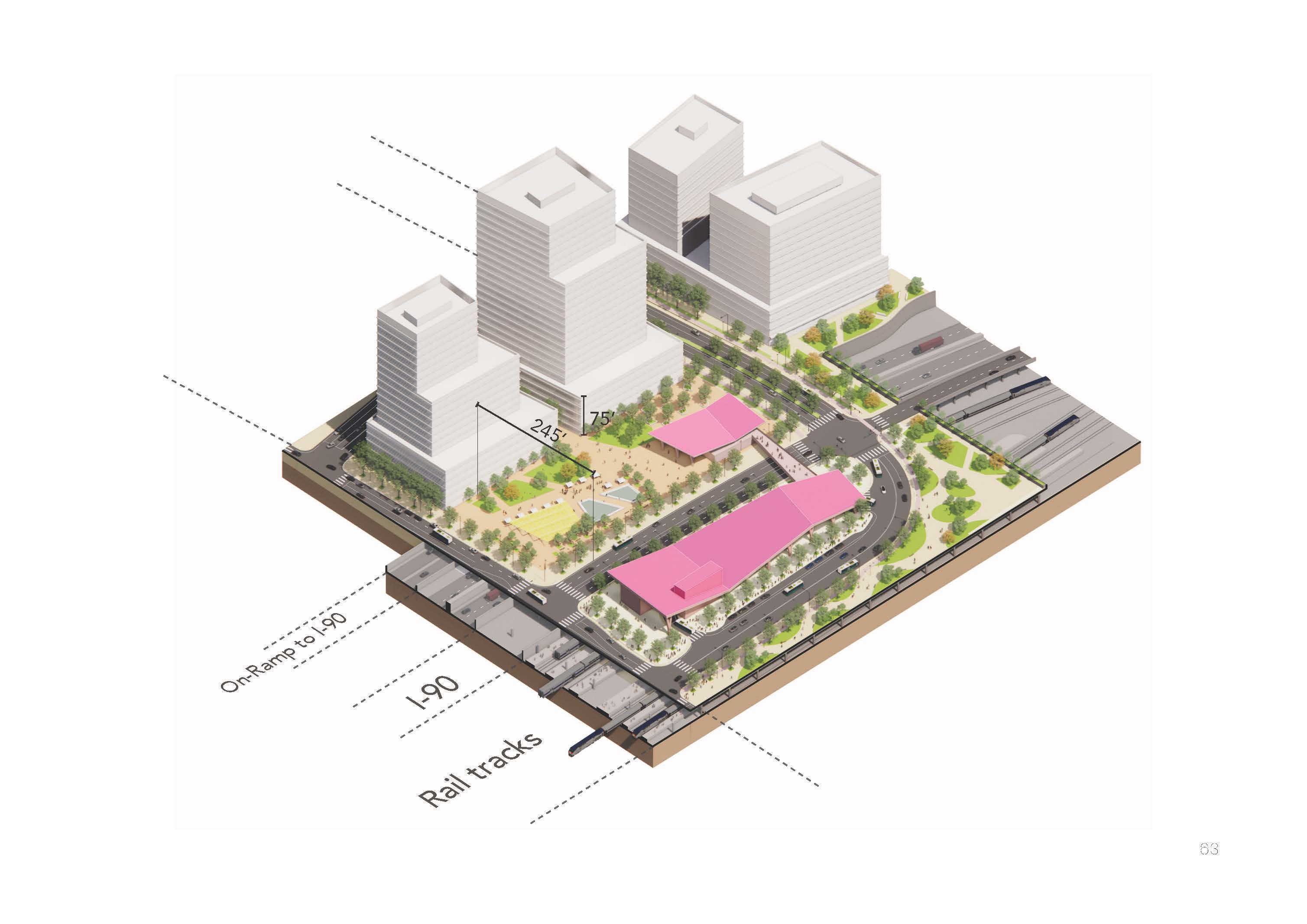
Beacon Park Yards explores the long-term transformation of rail and highway infrastructure in Allston into a connected, development-ready urban district. The study focuses on the potential decking of I-90 to repair historic neighborhood divisions and enable new mixed-use growth tied to West Station.
The project evaluates alternative deck configurations, rail yard relocation strategies, and public realm opportunities along the People’s Pike corridor. Rather than treating infrastructure as a fixed constraint, the work positions it as an urban design catalyst capable of reshaping edge conditions, land value, and connectivity across the district.
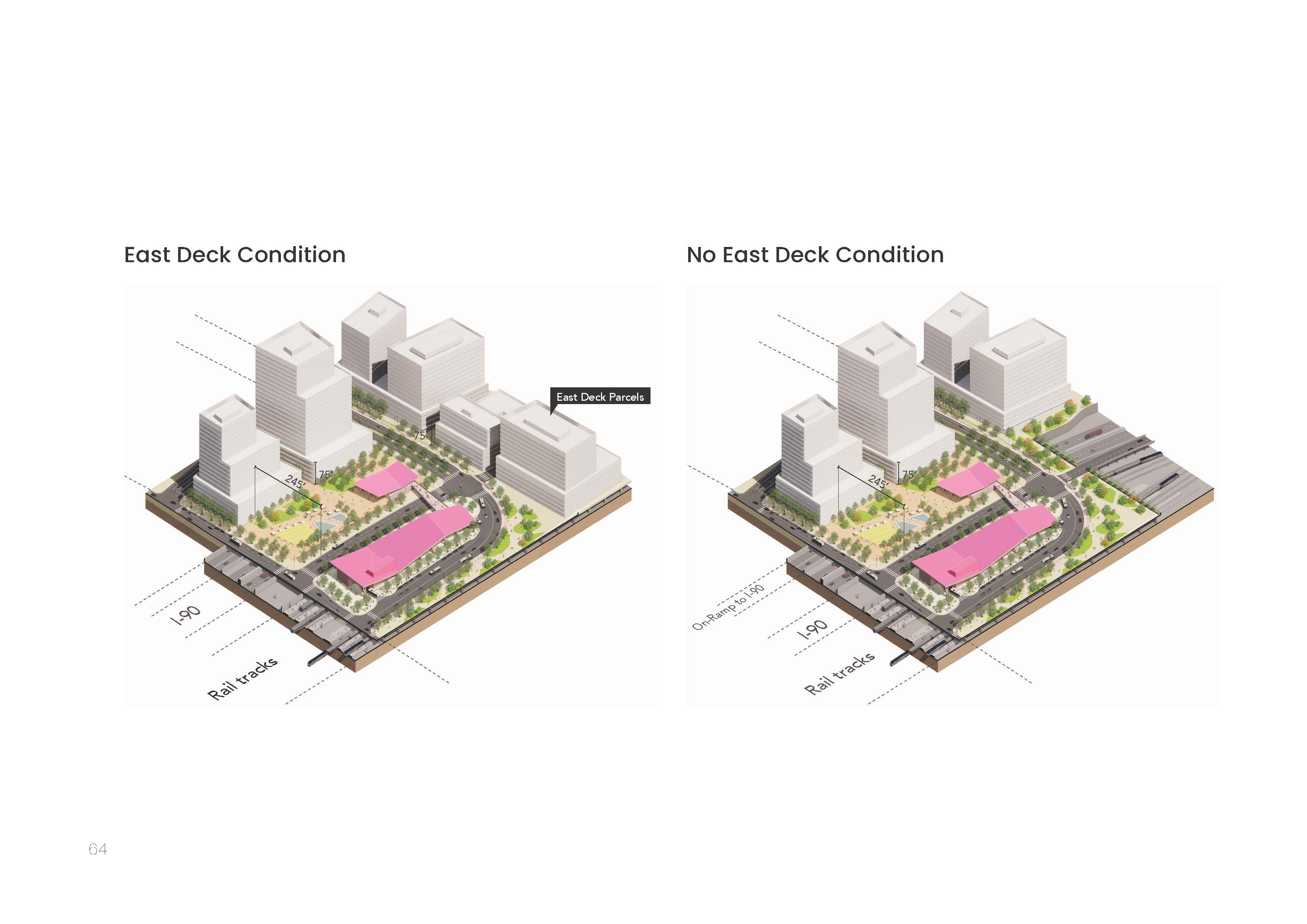
Multiple deck scenarios were tested to understand how varying structural extents would impact developable land, public open space, and adjacency to existing neighborhoods. The comparison between east deck and no east deck conditions illustrates how infrastructure investment directly influences block formation, skyline massing, and ground-level experience.
By extending the deck footprint, new parcels emerge that allow a graduated transition between low-rise residential fabric and higher-density development near West Station. The analysis clarifies how structural decisions shape long-term urban morphology.
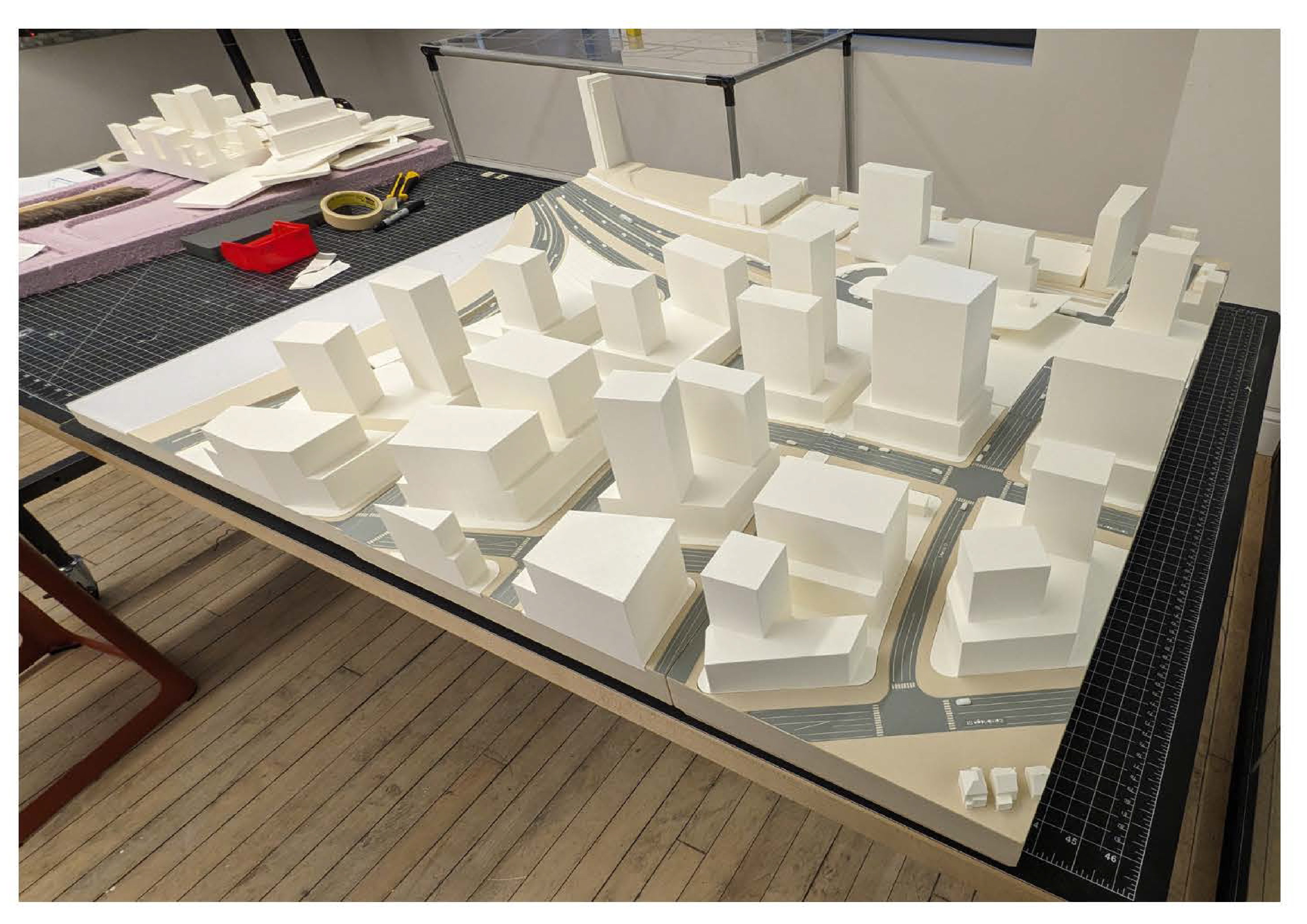
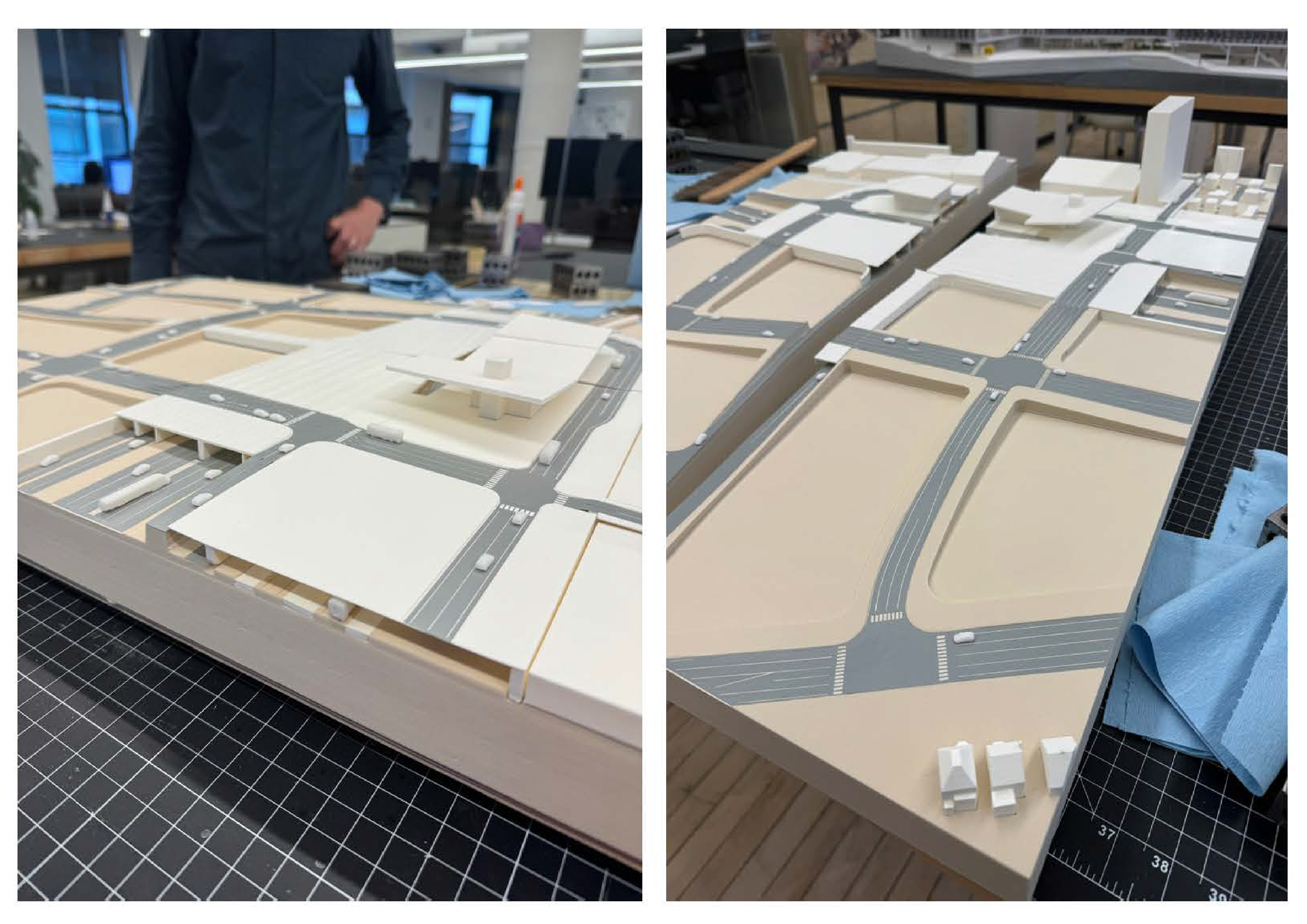
A detailed physical model was fabricated to evaluate topography, rail alignment, roadway relationships, and massing in three dimensions. The model allowed rapid iteration of parcel boundaries, vertical connections, and public space hierarchy while communicating complex infrastructural layering to stakeholders.
The tactile model became a key tool for understanding how deck elevation, ramp transitions, and open space terraces could reconcile commuter rail operations with neighborhood-scale urbanism.
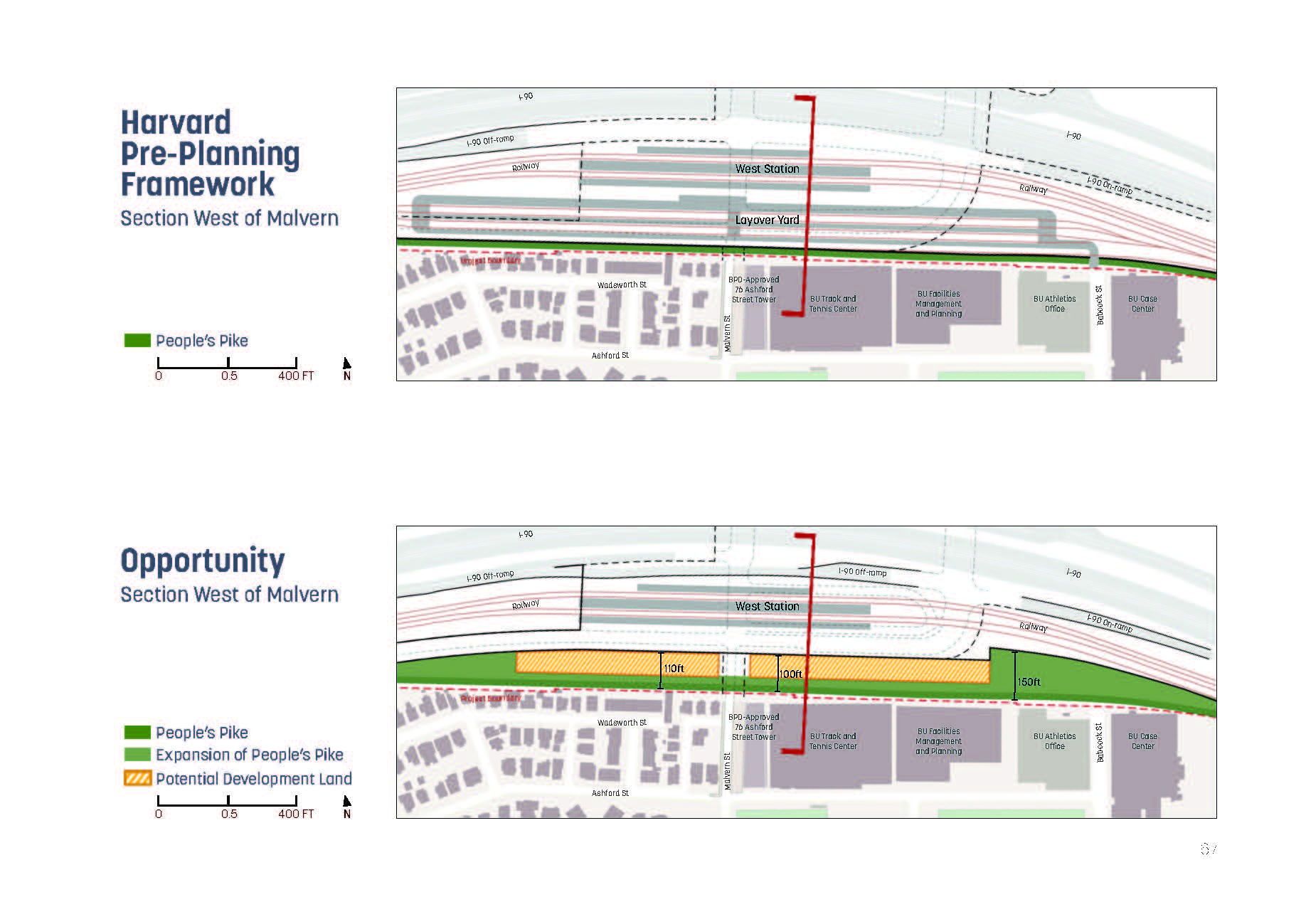
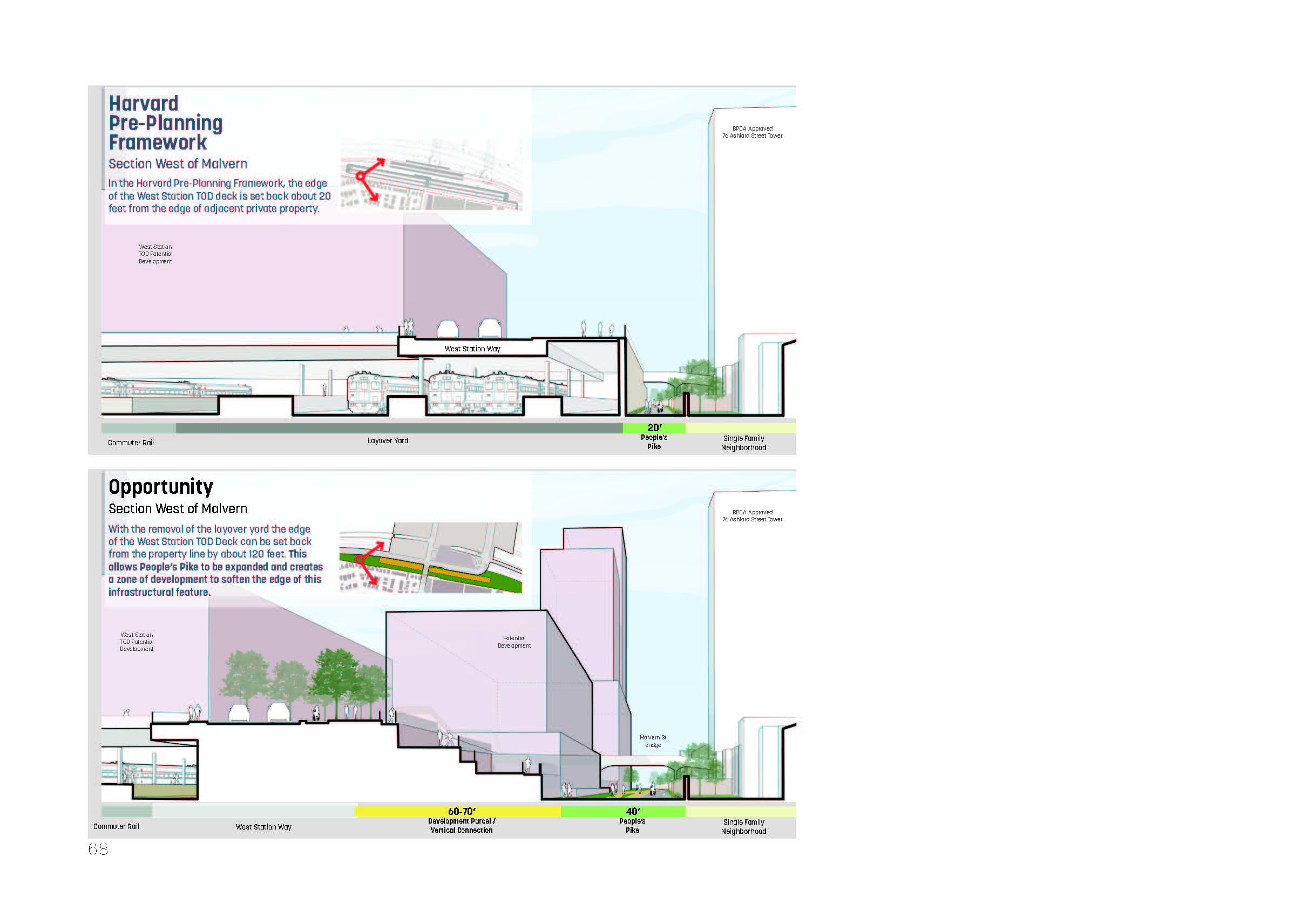
The Malvern Link condition examines how the removal or relocation of the layover yard would reshape the western edge of the district. Within the Harvard Pre-Planning Framework, the deck edge is constrained by rail operations and private property setbacks, limiting public realm expansion.
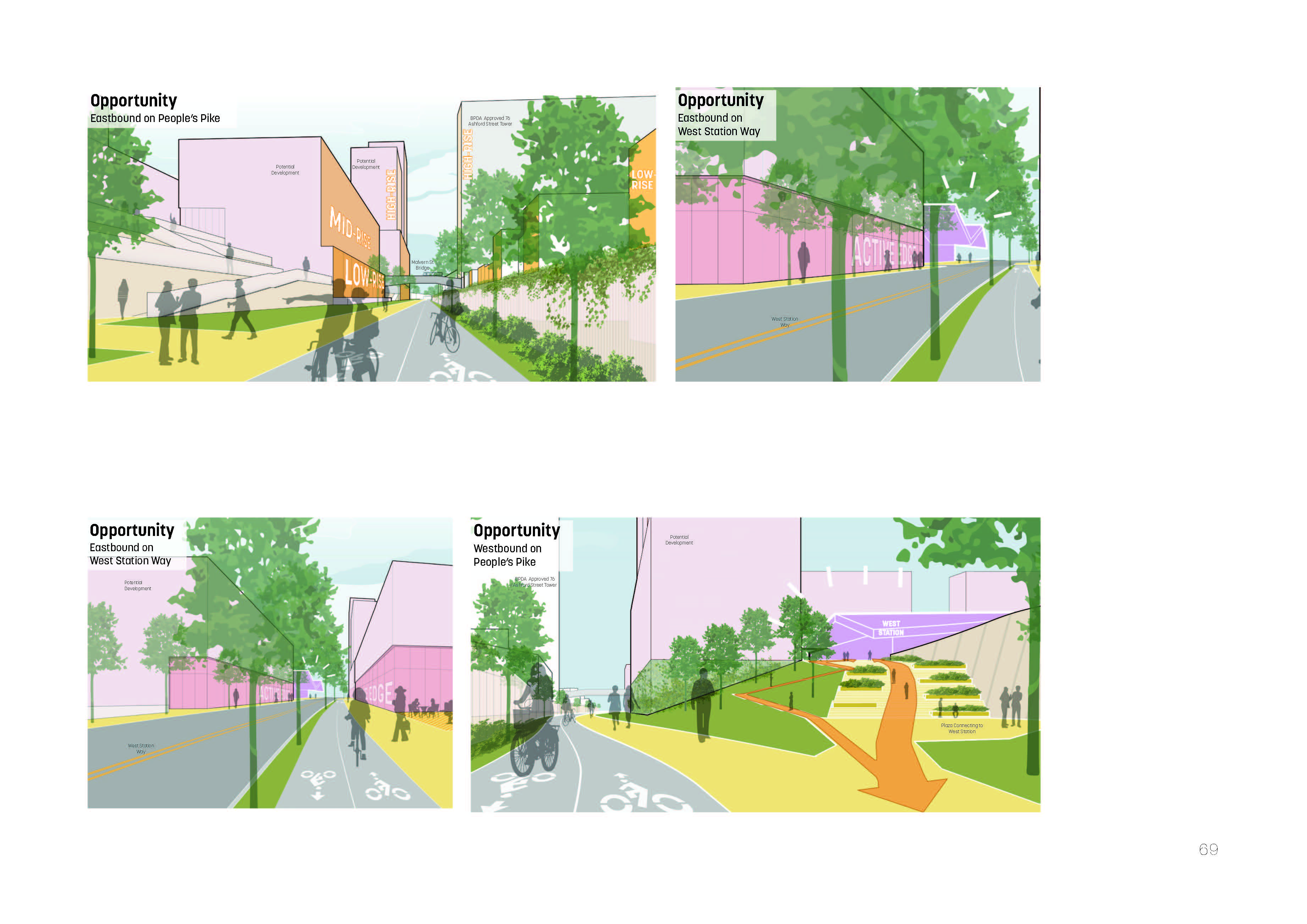
The opportunity scenario repositions the rail yard to create deeper setbacks, allowing People’s Pike to expand and soften the infrastructural boundary. This generates new development parcels while introducing vertical connections between West Station Way and adjacent residential streets.
Perspective studies further test pedestrian experience along People’s Pike and West Station Way. Streetscape width, tree canopy, bicycle infrastructure, and building massing are calibrated to mediate between large-scale institutional development and the existing neighborhood fabric.
Through deck strategy, rail realignment, and edge reconfiguration, Beacon Park Yards demonstrates how infrastructural systems can be reimagined as frameworks for urban repair — transforming barriers into connective tissue that supports long-term growth and public life.