
Programming, Test Fits
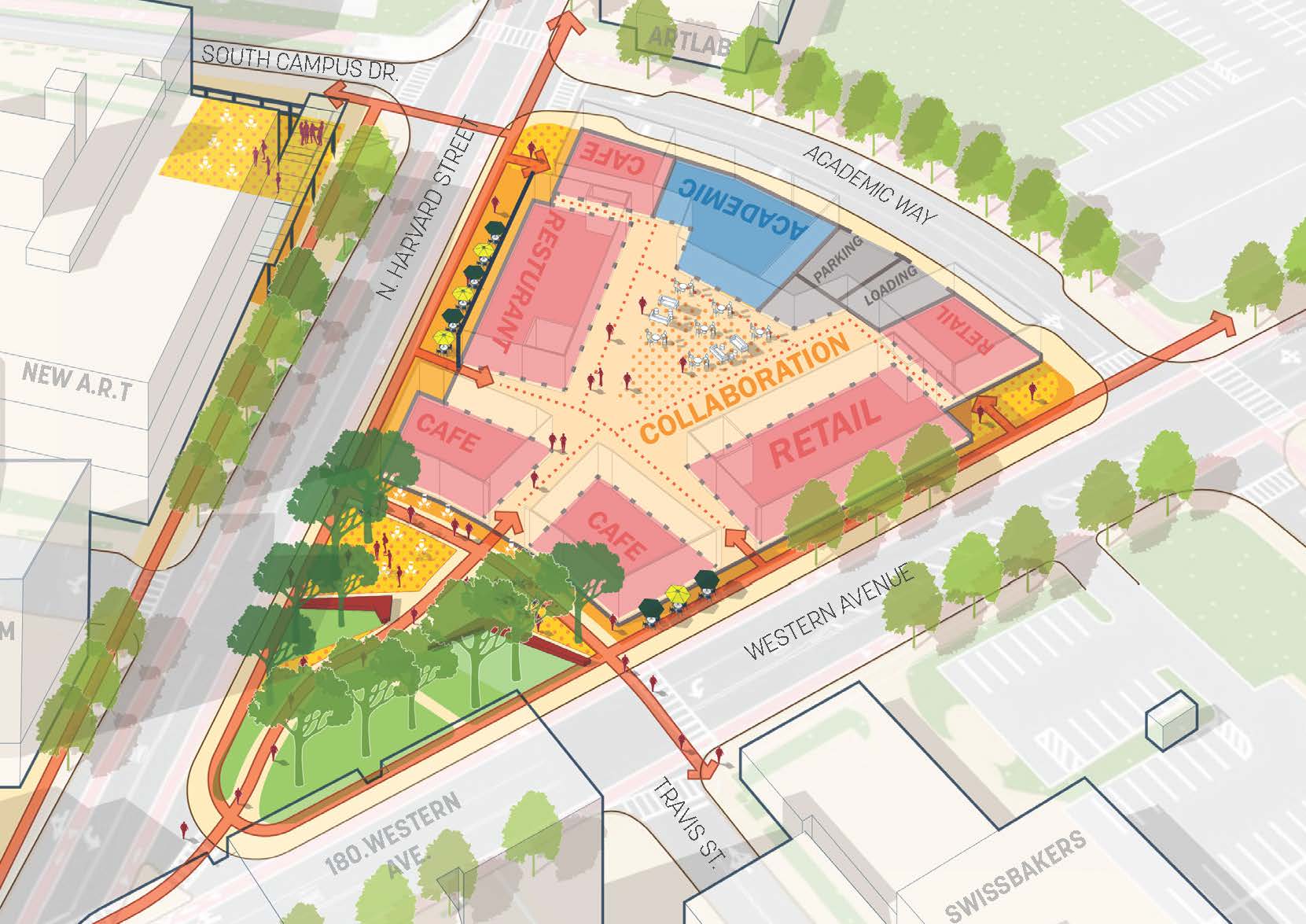
Barry’s Corner sits at a critical junction between Harvard’s expanding Allston campus and an established mixed-use neighborhood along Western Avenue. This study develops planning principles and programmatic strategies to guide a future gateway building that reinforces institutional identity while strengthening retail and public life at the street.
The work focuses on site calibration, space programming, and volumetric test fits to determine how academic, collaborative, and commercial uses can coexist within a compact 1.31-acre parcel.
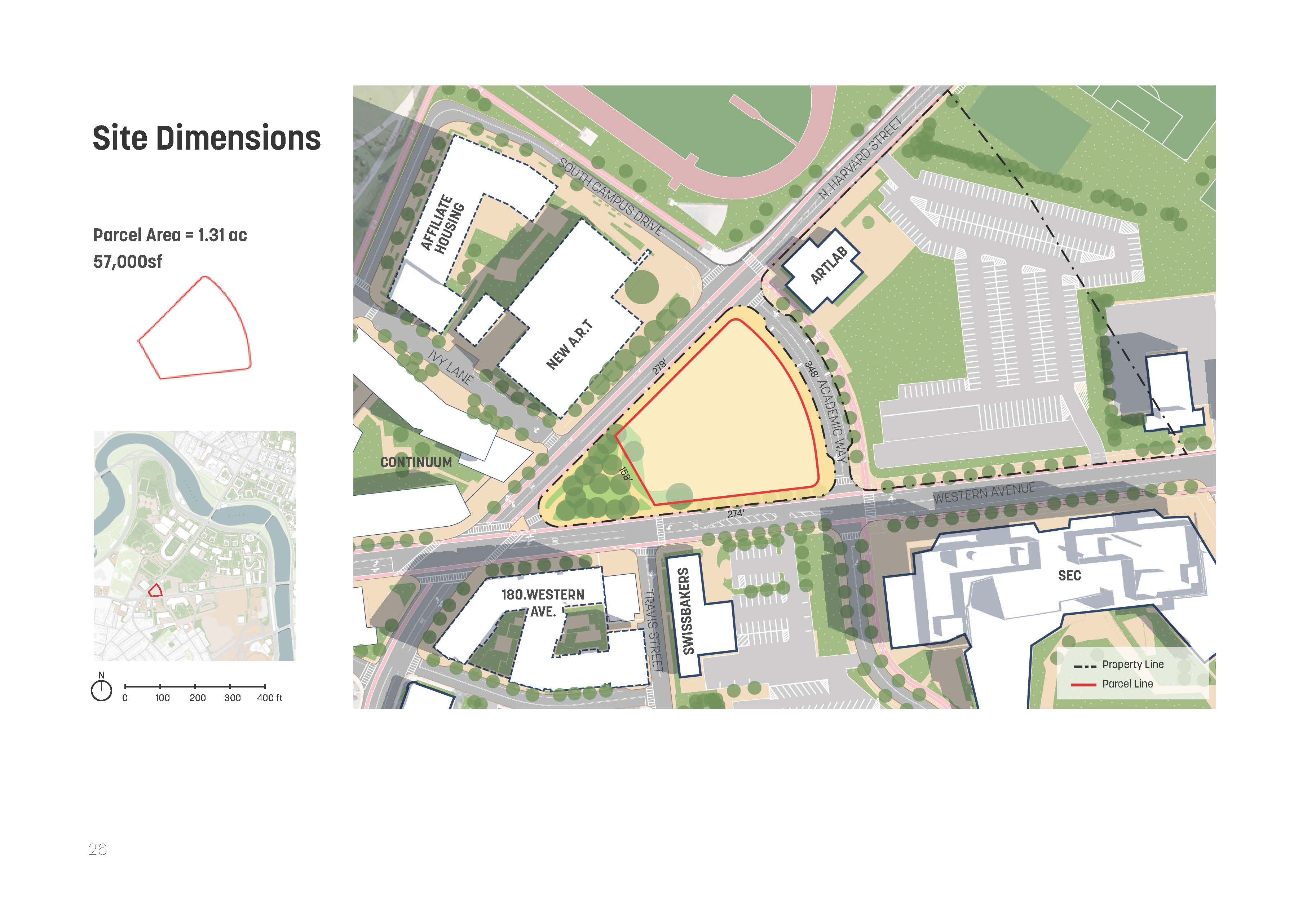
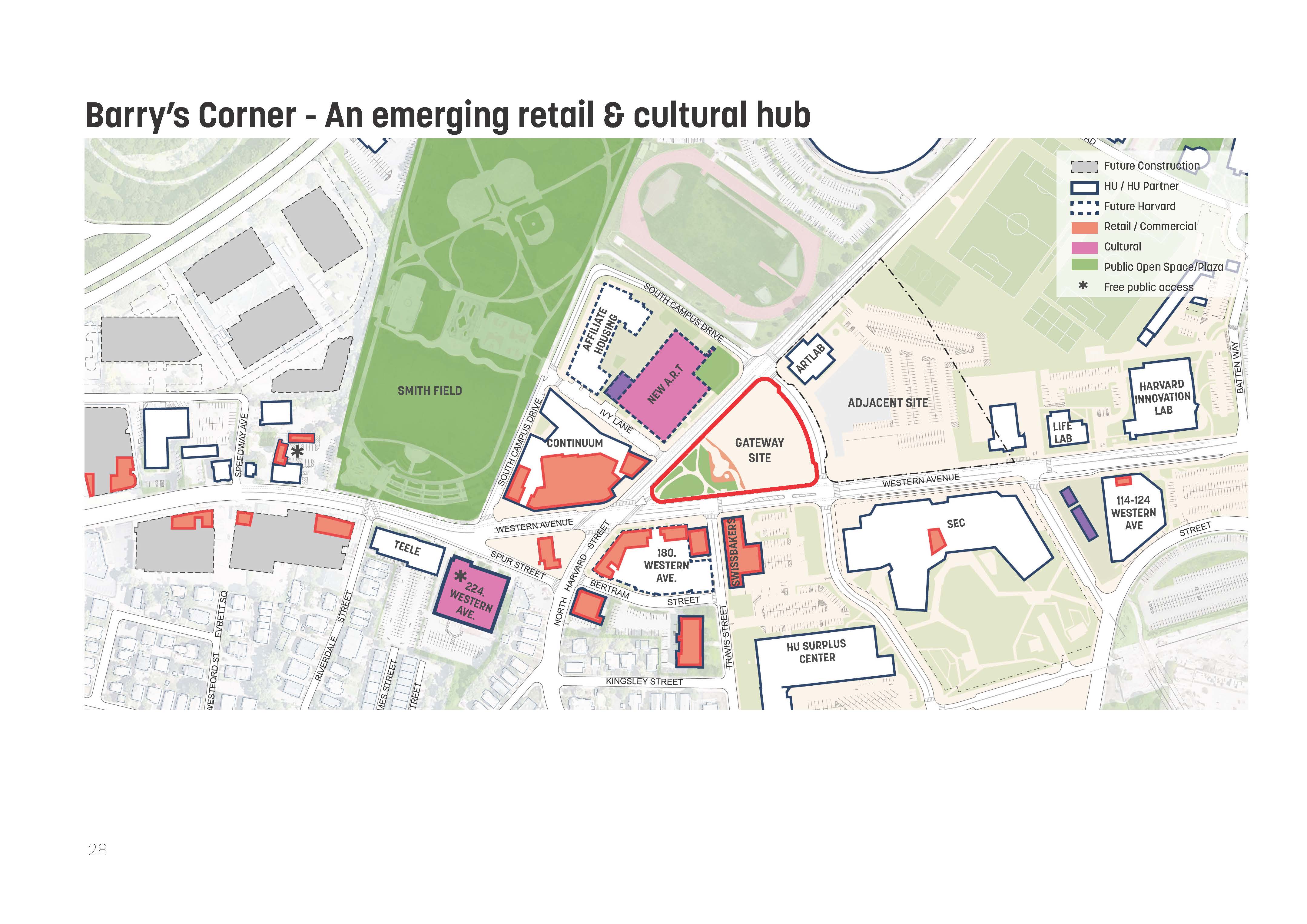
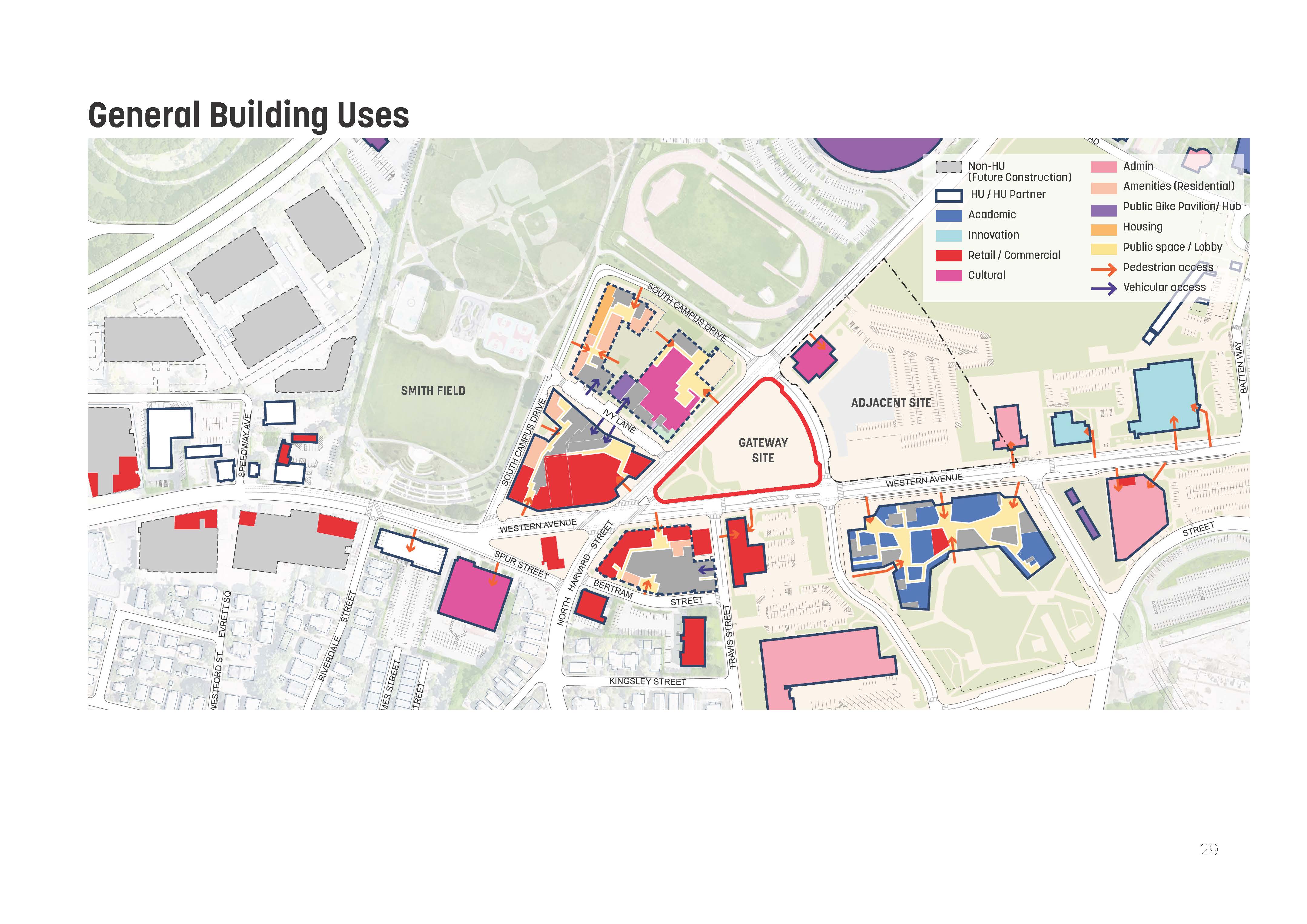
The site occupies a triangular parcel framed by Western Avenue, North Harvard Street, and Academic Way. Positioned between Smith Field, the A.R.T., and emerging innovation uses, the location acts as both a campus threshold and a neighborhood hinge.
Context mapping identifies adjacent institutional expansion, existing retail clusters, and public open space networks. The proposed gateway building must mediate between large-scale academic development and the fine-grain urban fabric along Western Avenue.
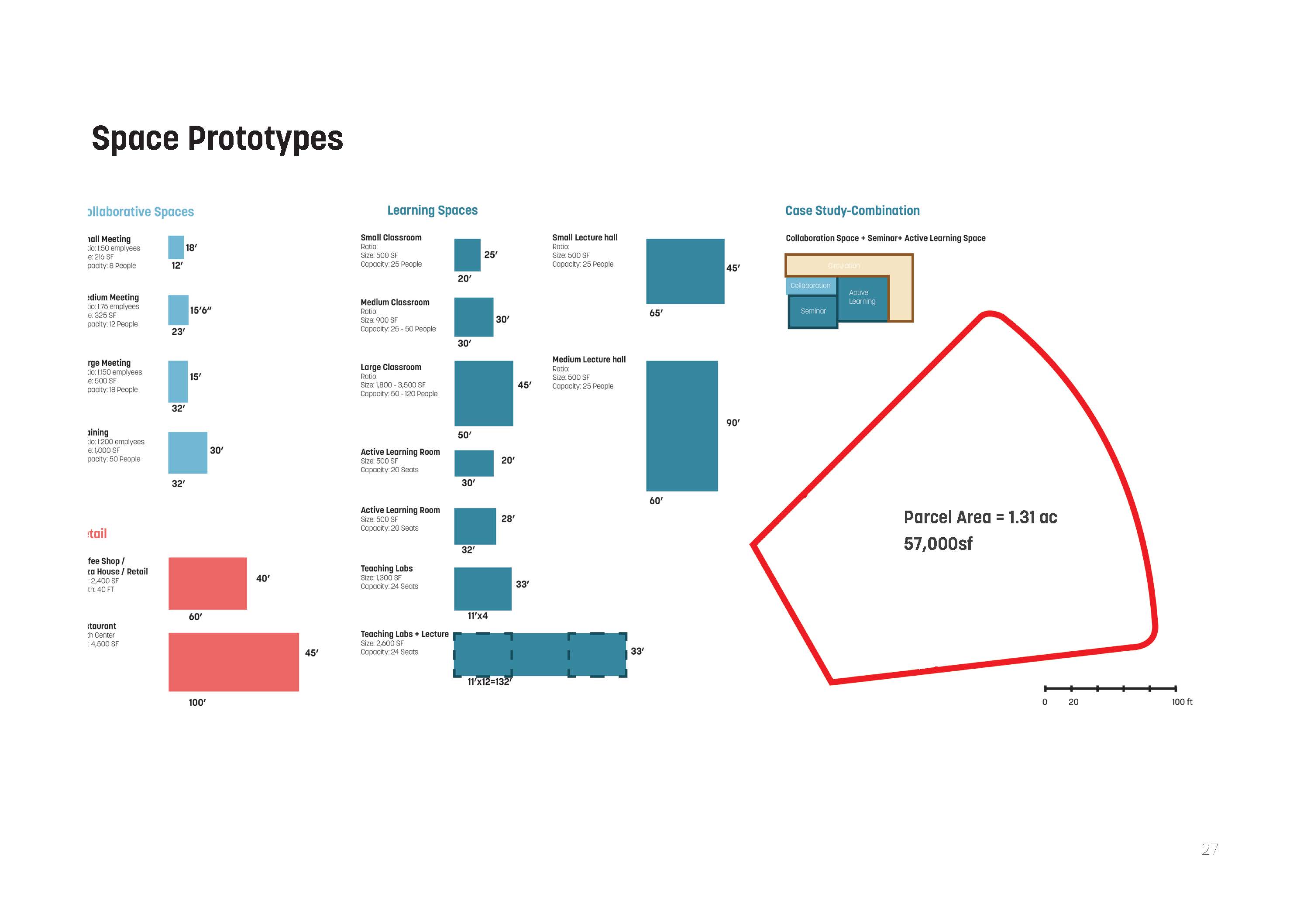
Program testing begins with scalable spatial prototypes for collaborative, academic, and retail uses. Classroom typologies, lecture halls, active learning environments, and teaching labs are diagrammed to establish dimensional requirements and stacking potential.
Retail and dining modules are calibrated to activate the ground plane, while upper-level academic volumes are organized around collaborative atrium space. These prototypes inform the total gross square footage target of approximately 300,000+ GSF while ensuring functional efficiency.
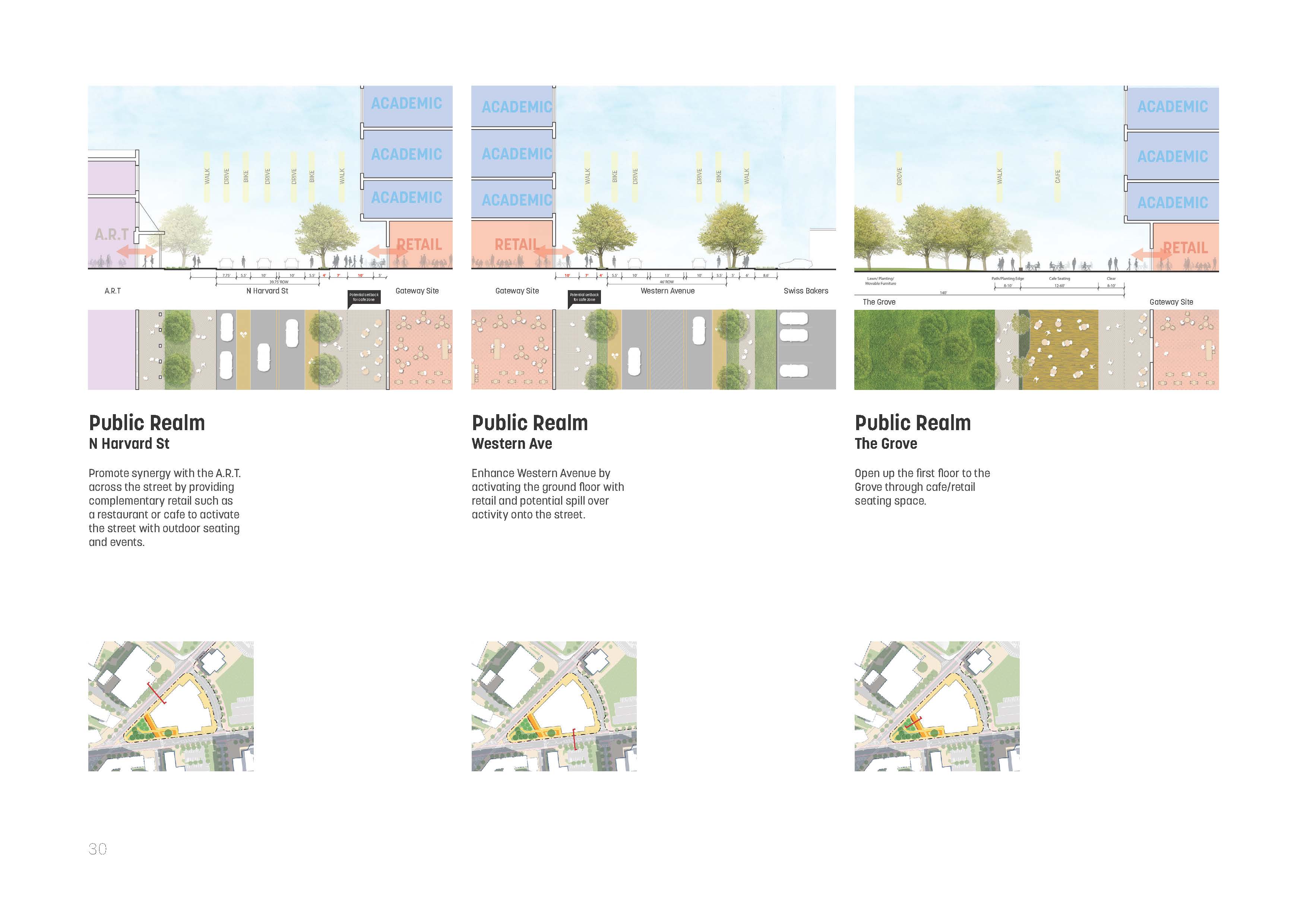
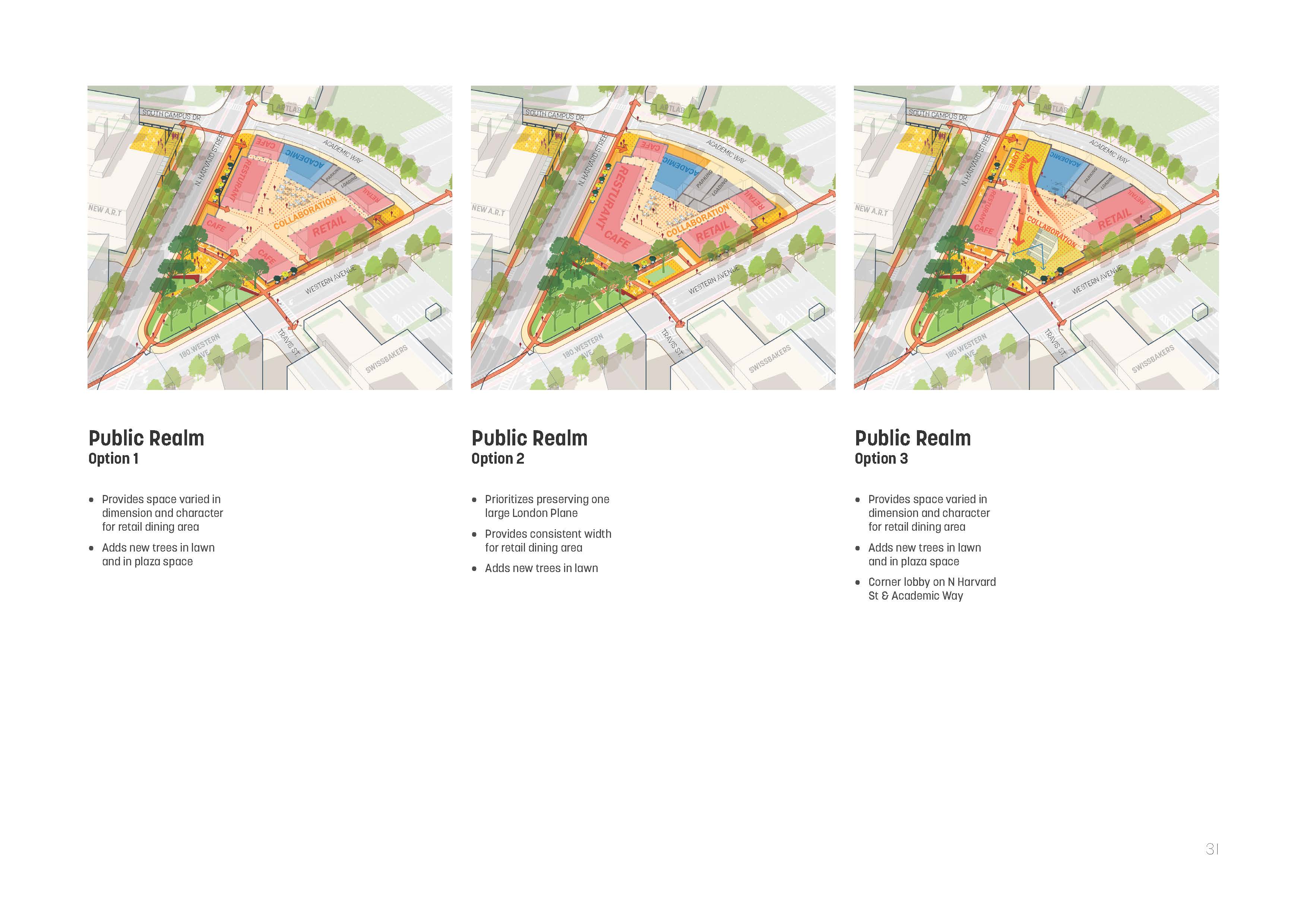
Public realm strategies prioritize pedestrian continuity along North Harvard Street and Western Avenue. Ground-floor retail and café uses spill into widened sidewalks and plaza conditions, strengthening the connection to the A.R.T. and adjacent institutional anchors.
Three public edges are defined:
These interventions transform the parcel from a residual edge condition into a civic-facing gateway.
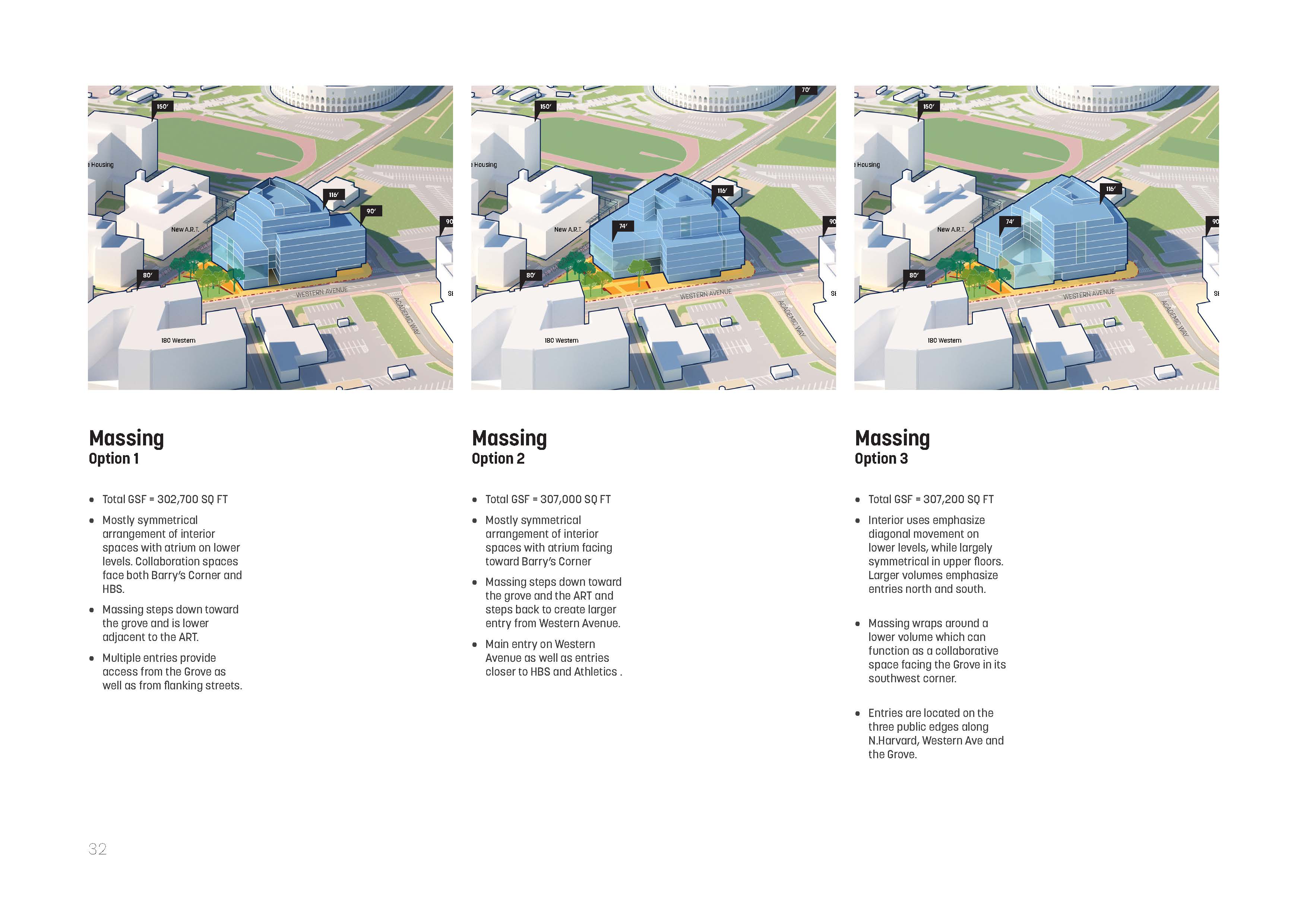
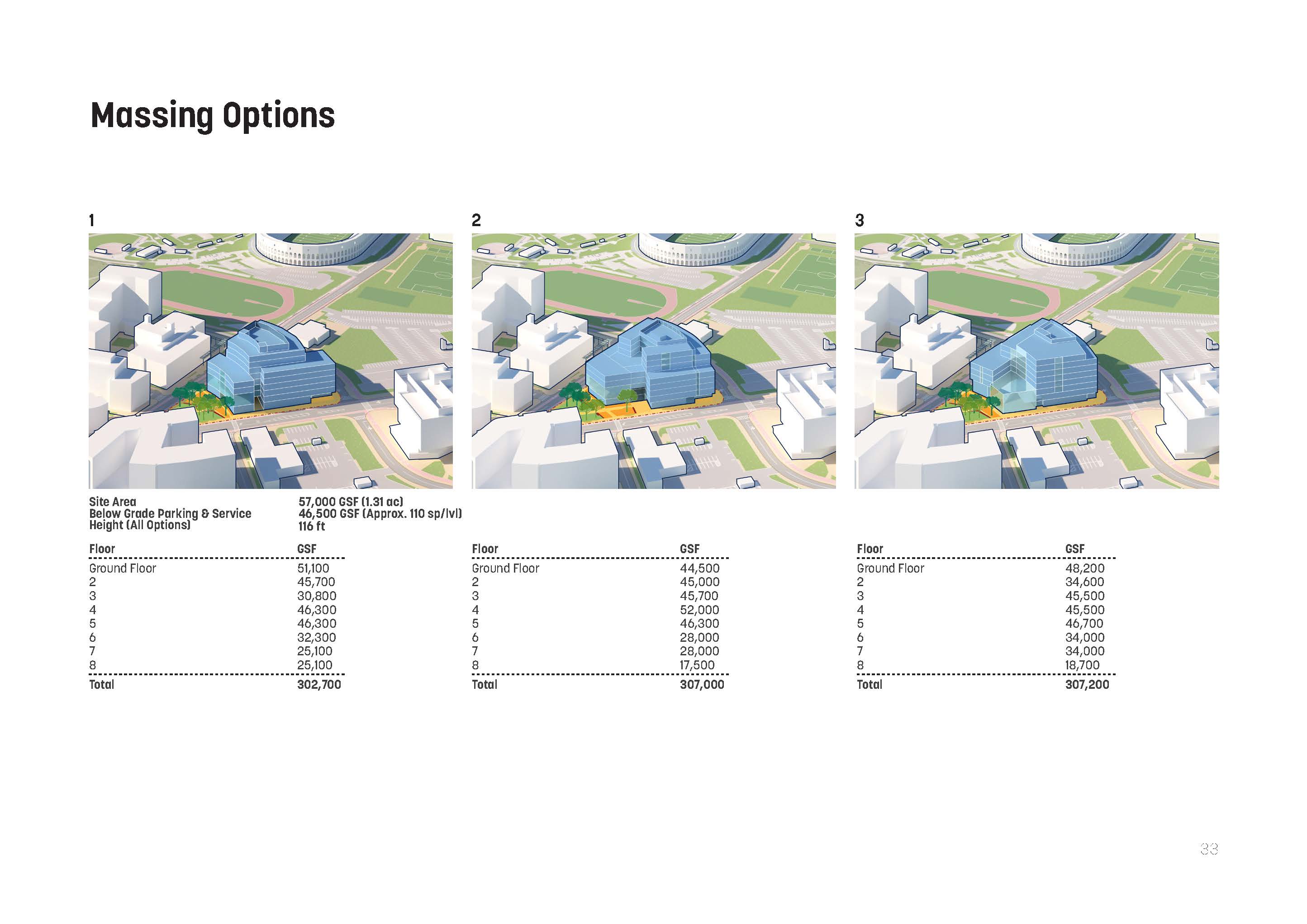
Multiple massing options test volumetric distribution, height transitions, and entry hierarchy. Each option maintains approximately 300,000–307,000 GSF while adjusting internal atrium placement, stepping strategies, and façade articulation.
Options explore:
The selected framework balances institutional presence with neighborhood sensitivity, establishing a clear architectural gateway while preserving active ground-floor engagement.
Barry’s Corner Programming demonstrates how rigorous spatial analysis and test fitting can translate planning principles into buildable form — aligning institutional growth with public life and neighborhood continuity.