
Zoning Reform, Comprehensive Planning, Public Engagement
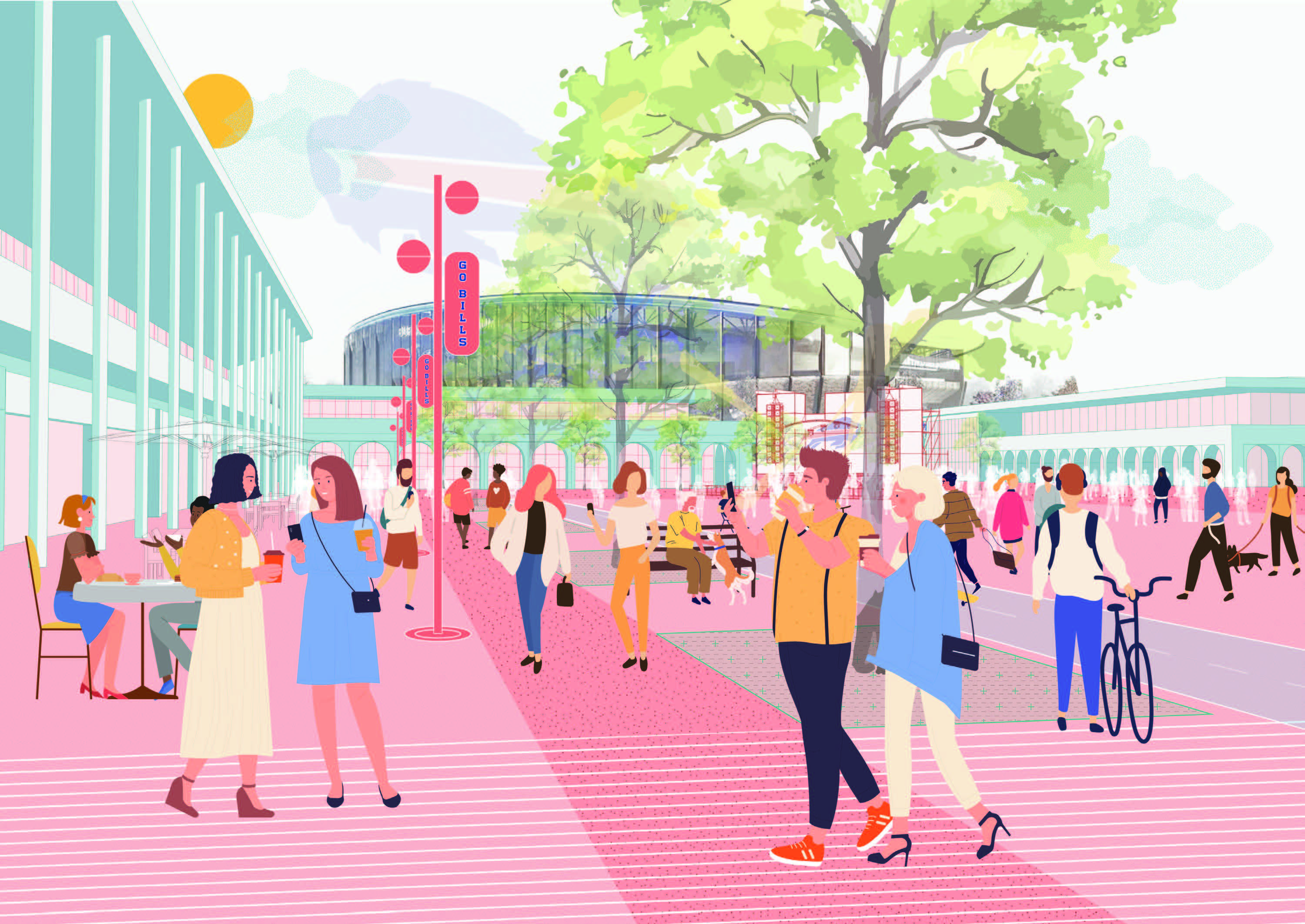
The Stadium Economic Impact Area Plan positions the district as a complete, mixed-use neighborhood that extends beyond the game-day experience. Rather than a single-use entertainment zone, the framework supports a walkable urban environment that integrates housing, retail, recreation, and open space within a coherent public realm structure.
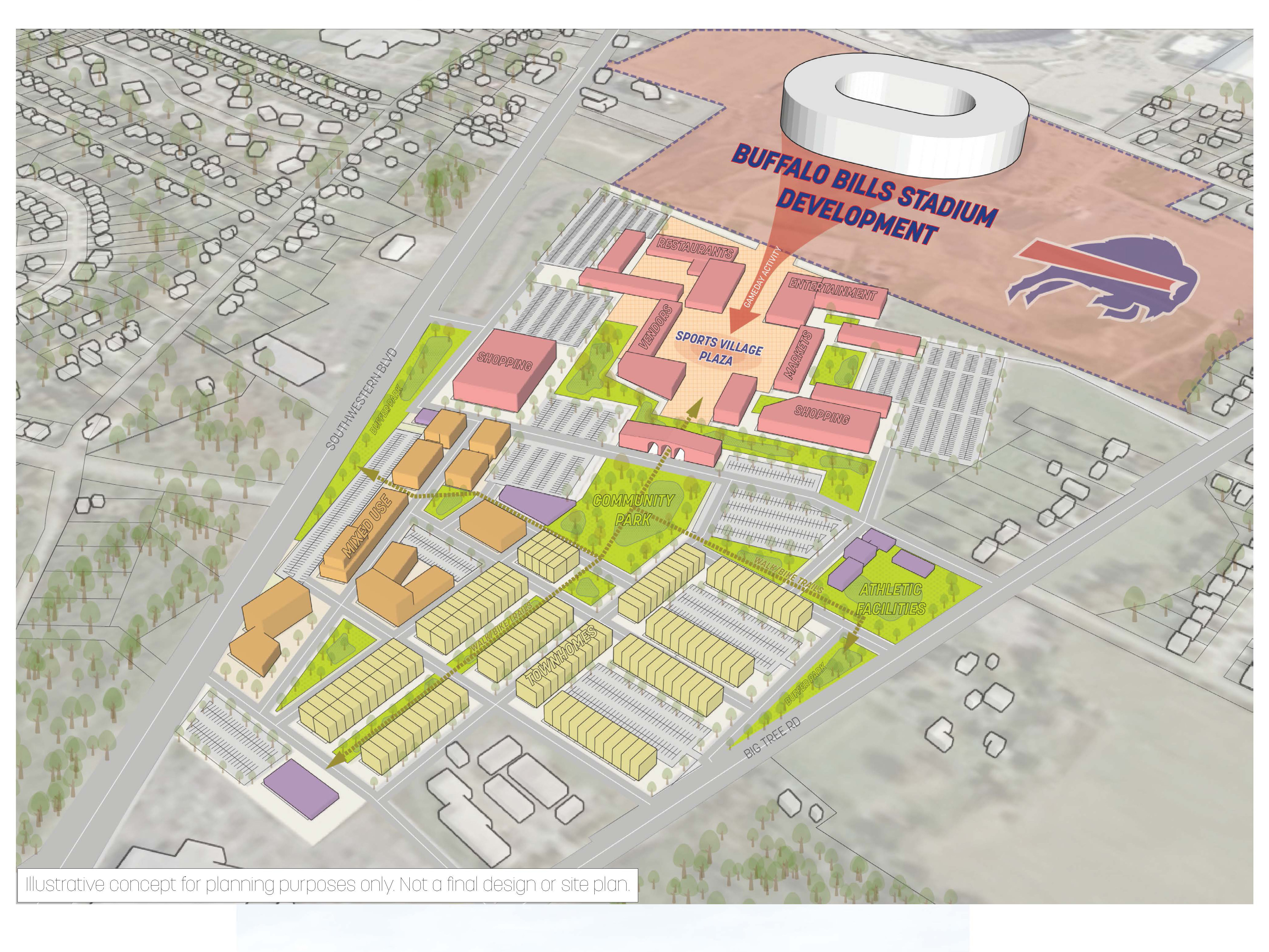
The plan is organized around a connected network of streets, parks, and civic spaces that establish long-term urban form. Uses are strategically distributed: an active commercial and entertainment core is concentrated closest to the stadium, accommodating restaurants, shops, and flexible event spaces capable of serving both peak crowds and everyday activity. Moving westward, intensity transitions to neighborhood-scale housing, community greens, and small public plazas that support daily life and reinforce residential character.
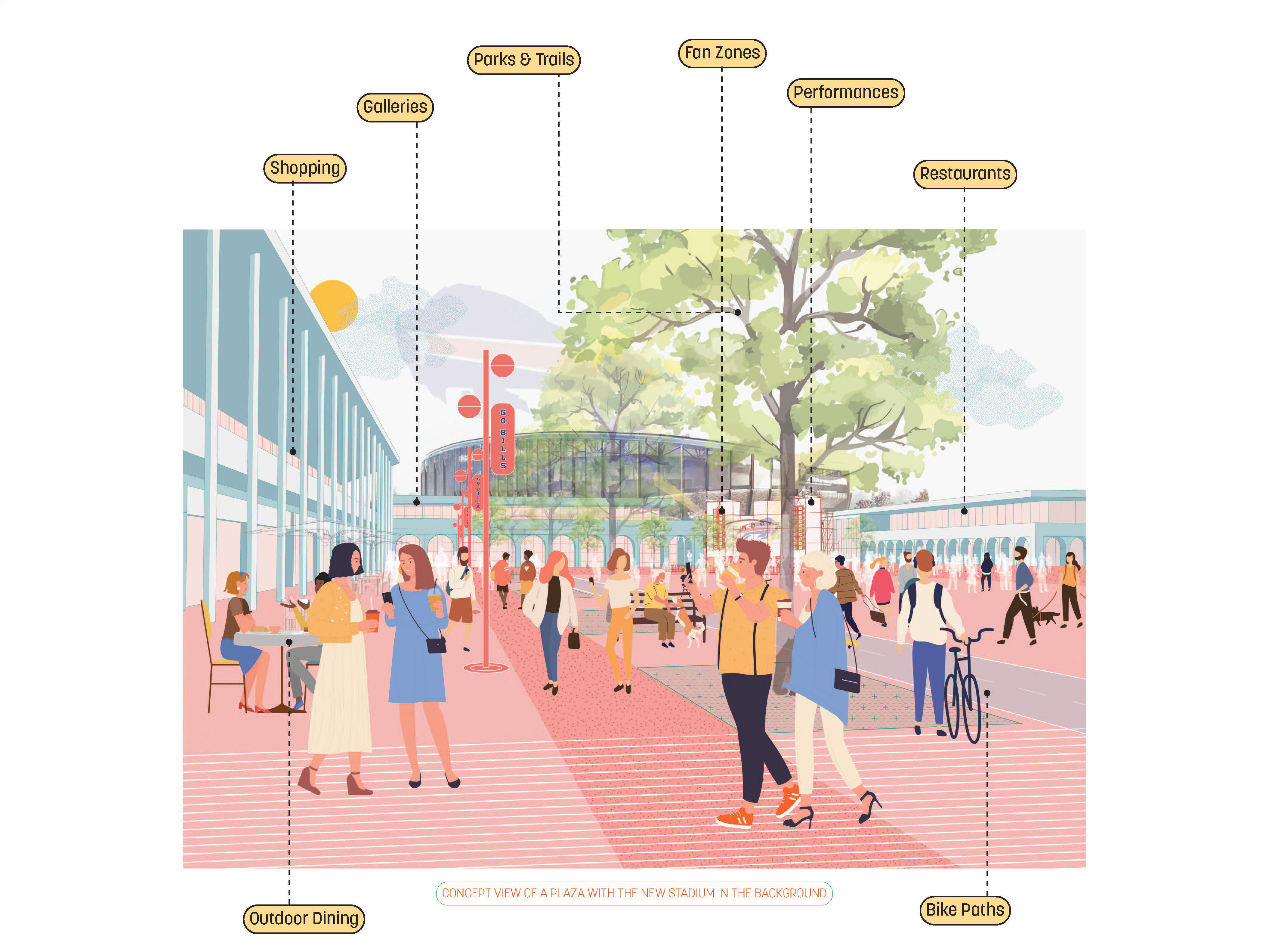
Design principles developed through the broader planning process inform the spatial strategy. Stadium-facing edges are programmed with plazas, gathering spaces, and event-supportive amenities to capture economic activity. A balanced mix of residential, commercial, and civic uses ensures year-round viability and reduces reliance on seasonal football traffic.
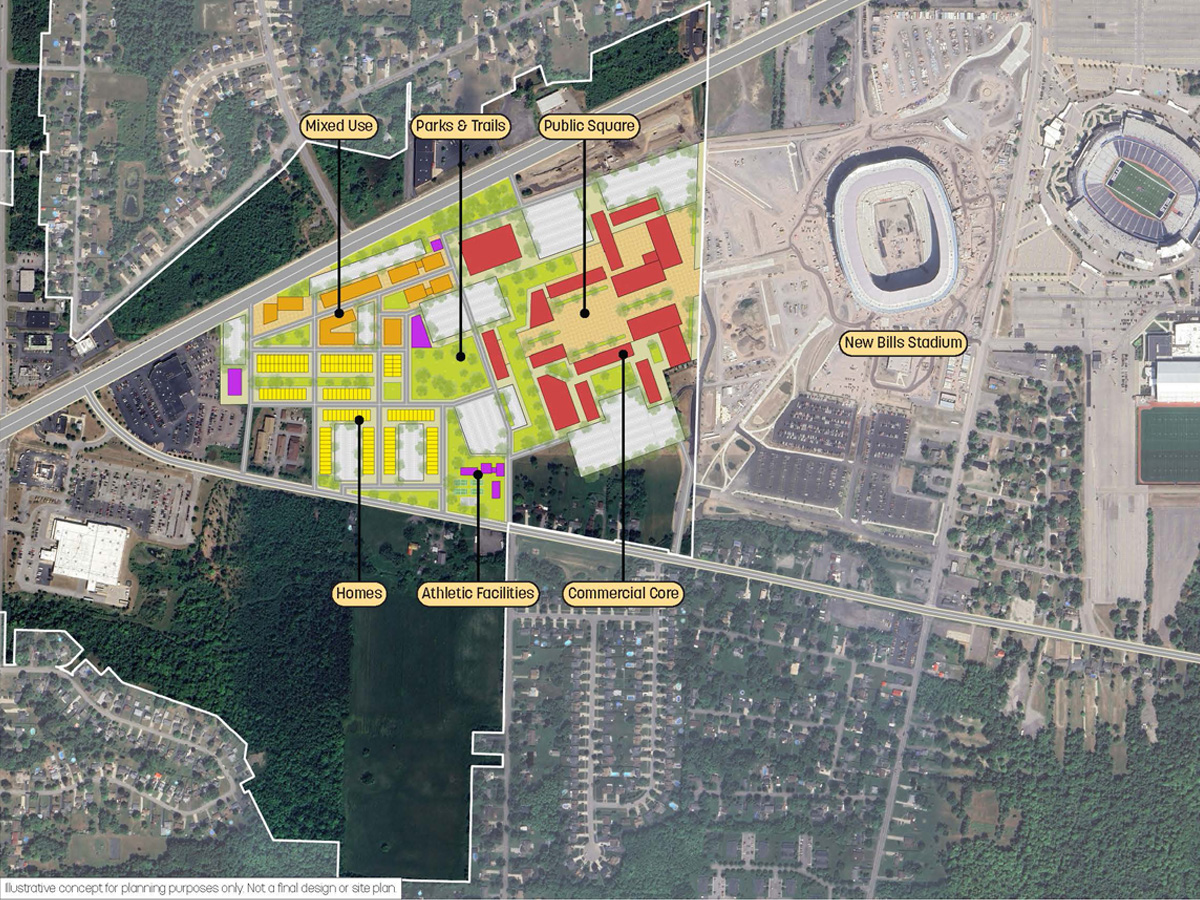
The framework also prioritizes compatibility with adjacent neighborhoods. Building scale steps down toward existing homes, landscaped buffers soften transitions, and new greenways improve connectivity between surrounding residential areas and the stadium district. Sustainability measures—including green infrastructure, compact block structure, and multimodal circulation—are integrated to support long-term resilience.
Collectively, the plan establishes a phased, implementable structure for growth. It leverages the presence of the new stadium while grounding redevelopment in walkability, urban form, and durable neighborhood character appropriate to Hamburg and Western New York.